Ice Climbing T-shirt Design: An Embroidery Review
As a professional designer and product reviewer who spends more time behind an embroidery hoop than a computer screen, I approach every new graphic with a specific question: will this actually stitch out well? When evaluating the Ice Climbing T-shirt Design, my focus shifts immediately from digital aesthetics to physical application. This asset is categorized under T-Shirt Designs and Graphics, but for makers and small business owners, its true value lies in its versatility across different mediums. Upon first inspection, the design carries a rugged, adventurous mood that translates beautifully to needle and thread. The layout suggests a balance between bold outlines and negative space, which is exactly what we look for when converting vector art into a machine embroidery design. It avoids the common pitfall of excessive detail that often gets lost or causes puckering on fabric.
Translating Vector Graphics to Stitched Reality
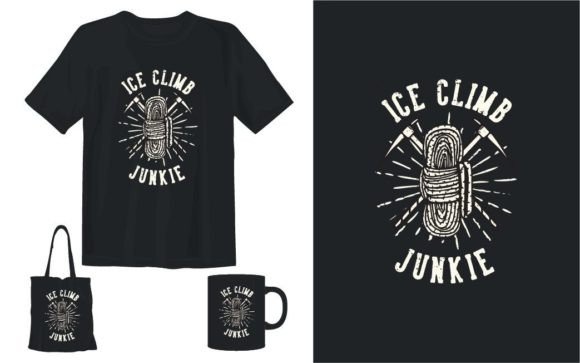
The initial impression of this Ice Climbing T-shirt Design is one of structural integrity. For those of us digitizing or preparing files for production, the included EPS and SVG formats are essential starting points. However, the real test is how these lines interpret as stitches. The design possesses a visual weight that implies it was created with apparel in mind. Unlike generic clip art, the shapes appear defined enough to support satin stitch borders without requiring excessive manual adjustment. This is crucial for maintaining clarity when resizing. If you are planning to use this as an applique design, the outer boundaries seem distinct enough to serve as reliable placement and tack-down lines. For direct embroidery, the internal elements likely offer opportunities for fill stitch textures that mimic the roughness of ice or gear, adding tactile interest to the finished product.
From a color theory perspective, the PNG preview allows us to assess contrast before threading the machine. Ice climbing themes naturally lend themselves to cool tones—whites, cyans, and slate greys—but also require high-contrast accents like safety orange or red to pop against dark fabrics. As a reviewer, I appreciate that this design does not rely solely on color gradients to define form. In embroidery, we cannot print gradients; we must simulate them with thread density and color blending. This graphic appears to have strong silhouette recognition, meaning even a monochromatic stitch-out on a navy sweatshirt would remain legible and impactful.
Real-World Application: The Custom Tote Bag Test
To truly judge the viability of this Ice Climbing T-shirt Design, I mentally placed it into a recent client scenario: creating branded merchandise for a local outdoor adventure shop. They needed a heavy-duty canvas tote bag that felt authentic, not touristy. Canvas is a forgiving fabric texture, but it demands a design with enough presence to avoid looking washed out. This graphic fits that niche perfectly. The bold nature of the illustration allows for a slightly higher stitch density without distorting the sturdy canvas weave. Using a tear-away stabilizer, the design anchors firmly, resulting in a crisp, professional embroidered patch aesthetic directly on the bag.
Beyond tote bags, this design shows immense promise for custom apparel and sweatshirt embroidery. Imagine this centered on a heather grey crewneck or positioned over the heart on a technical fleece. The theme resonates deeply with hobbyists and athletes, making it an ideal candidate for personalized gifts or boutique products. For Etsy sellers targeting the outdoor niche, this isn't just another winter graphic; it is a specific sub-niche asset that can differentiate your shop from generalist competitors. I can also envision this working exceptionally well for holiday embroidery projects, perhaps as a unique ornament or a stocking decoration for the climber in the family who already has too many carabiners. The versatility extends to smaller items like caps, provided the digitizer adjusts the vertical scale to accommodate the curved surface and limited hoop size.
Navigating Fabric Limitations and Technical Constraints
While the Ice Climbing T-shirt Design is versatile, experienced makers know that no file is universally perfect. There are specific scenarios where caution is required. If you intend to stitch this on performance wear or thin, stretchy synthetic fabrics commonly used in climbing gear, you must adjust your expectations and techniques. These materials are unstable. A dense fill stitch area in the center of this design could cause tunneling or warping if not properly supported. Always pair lightweight knits with a cut-away stabilizer and consider using a water-soluble topping to prevent stitches from sinking into the fabric texture.
Size reduction is another critical consideration. While the SVG format is infinitely scalable digitally, thread has physical limits. If you attempt to shrink this design down for a baby embroidery project or a sleeve cuff, tiny details may merge. Satin stitches narrower than 1mm can break needles or unravel, while small text elements may become illegible blobs. Before committing to a micro-version, verify the minimum safe dimensions. Conversely, enlarging the design for a large back print on a jacket requires checking stitch density. Simply stretching a digital embroidery file increases the distance between stitches, potentially leaving gaps. You may need to re-digitize or add underlay stitches to maintain coverage at larger scales.
Dark fabrics present their own challenge. If the design includes white or light-colored elements intended to represent ice or snow, ensure your digitizing includes adequate underlay to prevent the dark fabric grain from showing through the stitches. Without this foundation, even bright white thread can look muddy against black cotton. This attention to technical execution is what separates a homemade craft from a premium handmade product.
Elevating Brand Value and Customer Trust
For creative entrepreneurs and commercial embroidery businesses, the choice of design assets directly influences perceived value. Using a cohesive, high-quality graphic like this Ice Climbing T-shirt Design signals professionalism. Customers recognize when a design has been thoughtfully adapted for embroidery versus when it is merely a printed image forced onto fabric. Clean edges, appropriate density, and thematic relevance build trust. When selling finished products at craft fairs or online, this level of quality justifies higher price points. It transforms a basic garment into a desirable piece of merchandise.
Furthermore, utilizing the included PNG file for printable mockups enhances buyer engagement. Before investing thread and time, you can showcase the design on various products digitally. This is invaluable for testing market demand. Does the design sell better on mugs or hoodies? The mockup phase answers this without waste. Consistency across your product line—using the same design language on tags, packaging, and apparel—strengthens brand recognition. This graphic serves as a solid anchor for such branding efforts, offering a distinct visual identity that appeals to a passionate community.
Essential Pre-Stitch Checklist for Makers
Before you load this Ice Climbing T-shirt Design into your machine or list it in your shop, adhere to these practical protocols:
- Verify Licensing: Confirm whether your purchase includes commercial rights for selling finished physical items or if it is restricted to personal use. Never assume; always check the specific license terms provided with the ZIP folder.
- Test on Scrap Fabric: Always run a test stitch-out on material similar to your final project. Check for registration issues, puckering, or thread breaks.
- Assess Stabilizer Needs: Match your stabilizer type (cut-away, tear-away, wash-away) to the specific fabric weight and stretch of your project.
- Check Thread Contrast: View the design in black and white to ensure tonal separation exists independent of color. This guarantees readability on all fabric shades.
- Inspect Small Details: Zoom in to identify any areas that may be too small to stitch reliably. Edit or remove these elements before production.
- Confirm Hoop Size Compatibility: Ensure the design dimensions fit within your machine’s maximum embroidery field without requiring excessive re-hooping or splitting.
- Review File Formats: While EPS and SVG are included, ensure you have the correct machine-specific embroidery file format (e.g., PES, DST, JEF) or the software necessary to convert them accurately.
By treating the Ice Climbing T-shirt Design as a foundational component of your production workflow rather than just a download, you ensure superior results. Whether you are crafting a personalized gift for a fellow alpinist or expanding your small shop product line, this graphic offers the structural and thematic strength necessary for successful embroidery. Respect the technical requirements, test thoroughly, and let the quality of your stitching elevate the design to its full potential.